MBC’s Andrea Potts sat down with researcher Anaïs Walsdorf to discuss metallurgical collections in museums, and how their colonial histories can be rediscovered and made visible.
Anaïs Walsdorf is an AHRC-funded Collaborative Doctoral Partnership PhD researcher between the History department at University of Warwick and the Science Museum in London. Her thesis, Metallic Empire: Science, Energy, and Industrial Imperialism in the John Percy Collection, 1817–89, focuses on the metallurgical collection of John Percy, and explores histories of colonial extraction, collecting, metallurgy, and nineteenth century industrial imperialism. Prior to beginning her PhD, Anaïs worked as a museum, library, and archive professional with institutions such as the 1947 Partition Archive, Wellcome Collection and Library, the Migration Museum, and the International Coalition of Sites of Conscience (ICSC).
Andrea: What is the focus of your research?
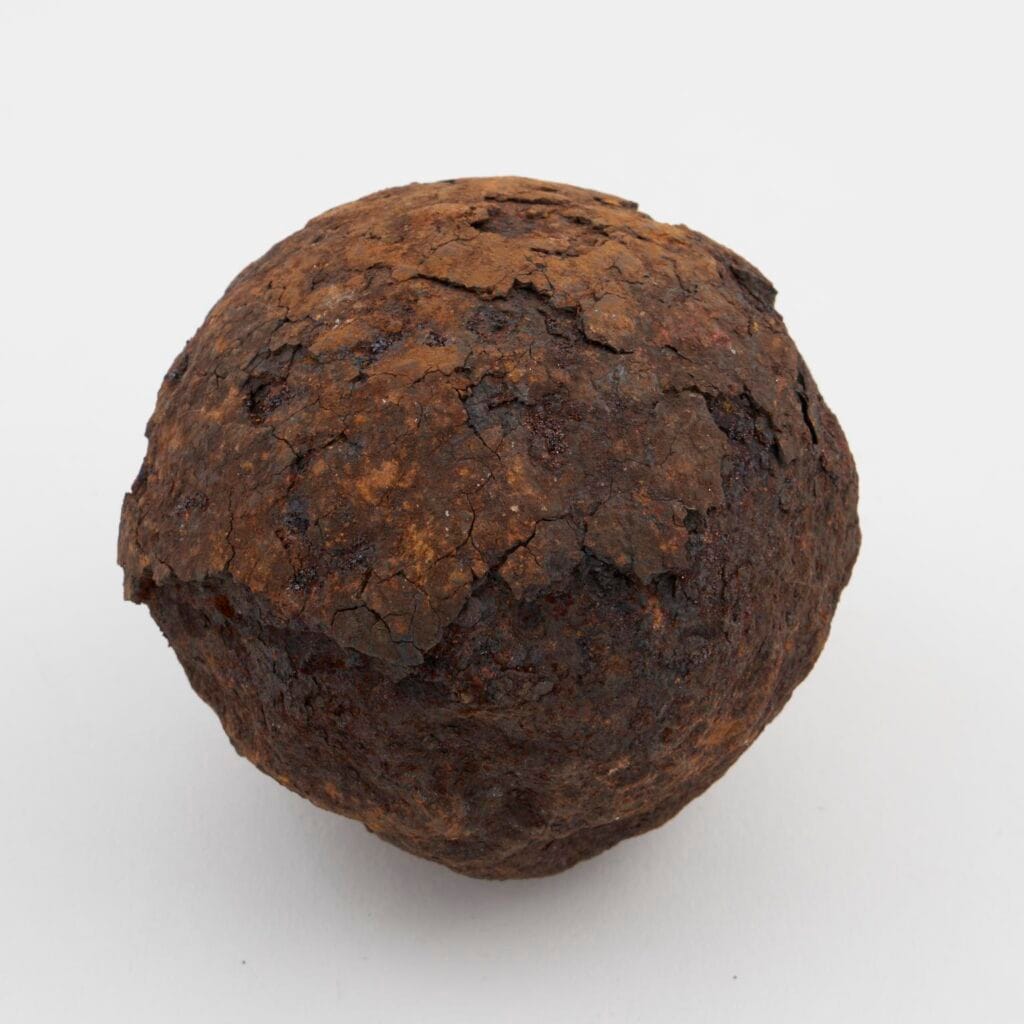
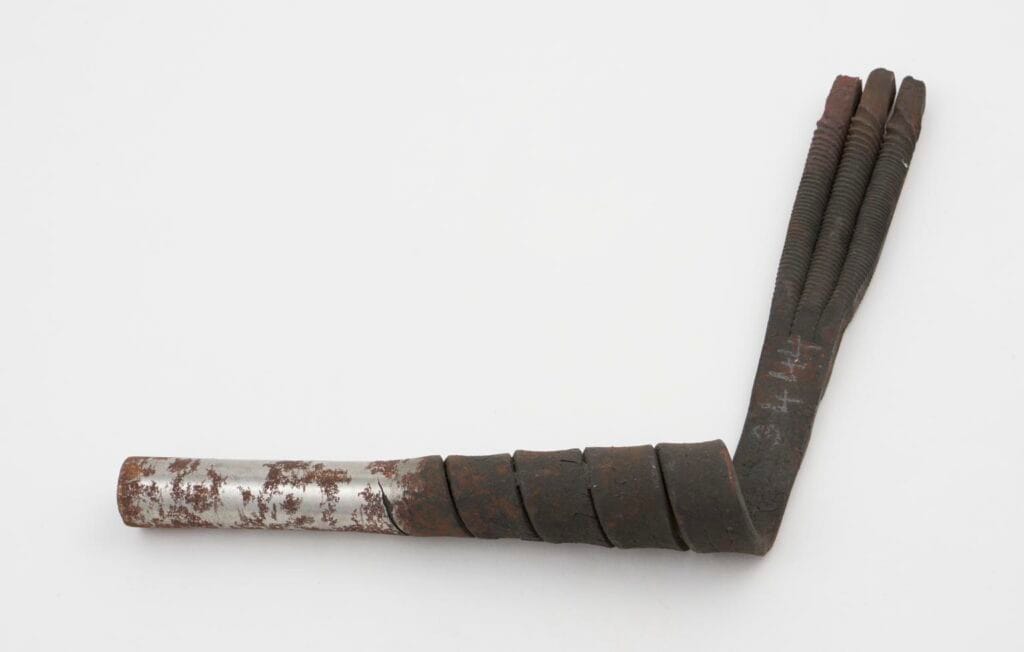
Anaïs: I’m doing a PhD between the University of Warwick and the Science Museum. My research focuses on a collection at the Science Museum called the John Percy Collection. And it’s a metallurgical collection from the nineteenth century. So, John Percy was a pretty well-known metallurgist in the nineteenth century. He is often credited with making metallurgy scientific. In Britain, metallurgy had been taught on the workshop floor through apprenticeships. So, iron and steel working. John Percey brought in chemistry, physics, mechanics. He specifically wanted to make it scientific. He’s not the only one that was doing this, but he is known as the father of English metallurgy. Now, throughout his career, John Percy created a collection of all sorts of things related to metallurgy. That includes metallic ores – literally rocks. It also includes the metals that are made out of the rocks. There are also objects that were manufactured out of those metals. For example, there’s a cannonball. And then there are also metals in decay and broken metals, which was of interest to scientists who wanted to work out how to make metals stronger. So, all in all, the collection has about 3,700 specimens. My specific focus is on the colonial history of this collection.
John Percy never left Europe, but he had this network of colonial officers, scientists, military, navy, all sorts of people who sent him specimens from all over the world. I’m looking at the stories behind different specimens in the collection and trying to understand the networks of scientific metallurgy of the nineteenth century. What I’m finding is that scientific metallurgy, like many European sciences in the nineteenth century, was inseparable from empire and its development. This includes the extraction of metals and fuels from the colonies, as well as the extraction of scientific knowledge and labour from the colonies. It also includes the use of metals to further the goals of imperialism through industrialisation and war. Industrialisation and war are major parts of colonial rule. These processes are all feeding into the wider development of metallurgy.
Andrea: What brought you to this collection and to this topic?
Anaïs: My master’s was in the history of empire, and I then worked in several museums. I was working in public engagement and visitor experience at the Wellcome Collection for quite a while. Wellcome Collection is a medical collection put together by Henry Wellcome in the nineteenth and early twentieth centuries. And we had the creative freedom to do our research about objects and to deliver tours based on our findings. And over the pandemic, there was time to really focus on that research. That was when I got really interested in the colonial history of scientific collections. The main thing that struck me was that there is so much research that focuses on colonial histories of anthropological collections, but there isn’t as much research that looks at science and natural history collections. And that research is very rarely on display in science and natural history museums. When you go to a geological gallery, it’s so beautiful. It’s about look at what the earth can create, these beautiful shapes and colours. The actual context of the extraction of these rocks is not talked about. These rocks had to be mined by specific people under specific colonial conditions. There’s a story of labour, land, resources and economy here. There’s so much behind the rocks. So, my research is about contextualising the collection.
Andrea: What are your research methods and your sources? What’s the process, from an object in the collection to producing a contextualised history about it.
Anaïs: Firstly, I worked out which specimens in the collection had geographical data connected to them in the archive.Where are they coming from outside of Europe? That still gave me a lot of rocks. I then used the catalogue for the collection which was put together by the Science Museum after Percy himself died in the 1890s. So that catalogue has little bits of information attached to each rock. Sometimes it gives you very little, but it’s a starting point. The process was essentially: that looks interesting, I’ll try to see where this specific rock or piece of metal leads me. Alongside this, Science Museum holds a large collection of John Percy’s personal correspondence, which also provided some clues. I ended up focusing on specimens that had information about them in the catalogue and the personal correspondence. For example, there’s a piece of cobalt and in the catalogue. The catalogue says that it came from someone named Percy Whitehead in South Africa and it was found ‘north of the diamond fields’. And that’s all I had as a starting point.
Andrea: How did you feel finding these little nuggets of information? Was it exciting?
Anaïs: 100% It’s my favourite part of the research, finding these connections and following the trail. And getting to a position where I can say I actually situated one rock and I know exactly where it came from and how it was extracted and how it got to the Science Museum.It’s amazing. It’s kind of crazy to be able to follow the journey of a rock. So, with this cobalt piece, I then found a letter from Percy Whitehead to John Percy that was connected to it. And in the letter, Percy Whitehead thanks John Percy for analysing the cobalt for him. And he adds that he can’t tell him exactly where he found the cobalt in South Africa because a lot of people are interested in this area. That tells me that John Percy is doing analyses for prospectors who are trying to open mines. John Percy would tell them if the cobalt was of a good quality or not.
From there, I just randomly searched for a Percy Whitehead based in South Africa, related to cobalt and I found that he did have a cobalt mine. And I then found that Percy Whitehead in South Africa used John Percy’s analysis of the cobalt in his mining application to the South African government. So, this is an early example of using chemical analysis in a mining application in the nineteenth century. So, science started to be used to legitimise and justify extraction. I’m interested in how this process eventually became systematic. That eventually the scientific analysis of rock becomes part of mining applications as standard. And I did actually find the actual mine in South Africa, which was awesome. I found a specific label on a map that stated Whitehead’s Cobalt Mine. It was a crazy moment to go from the cobalt in the collection to finding where it came from.
Andrea: Were there examples where the trail goes cold?
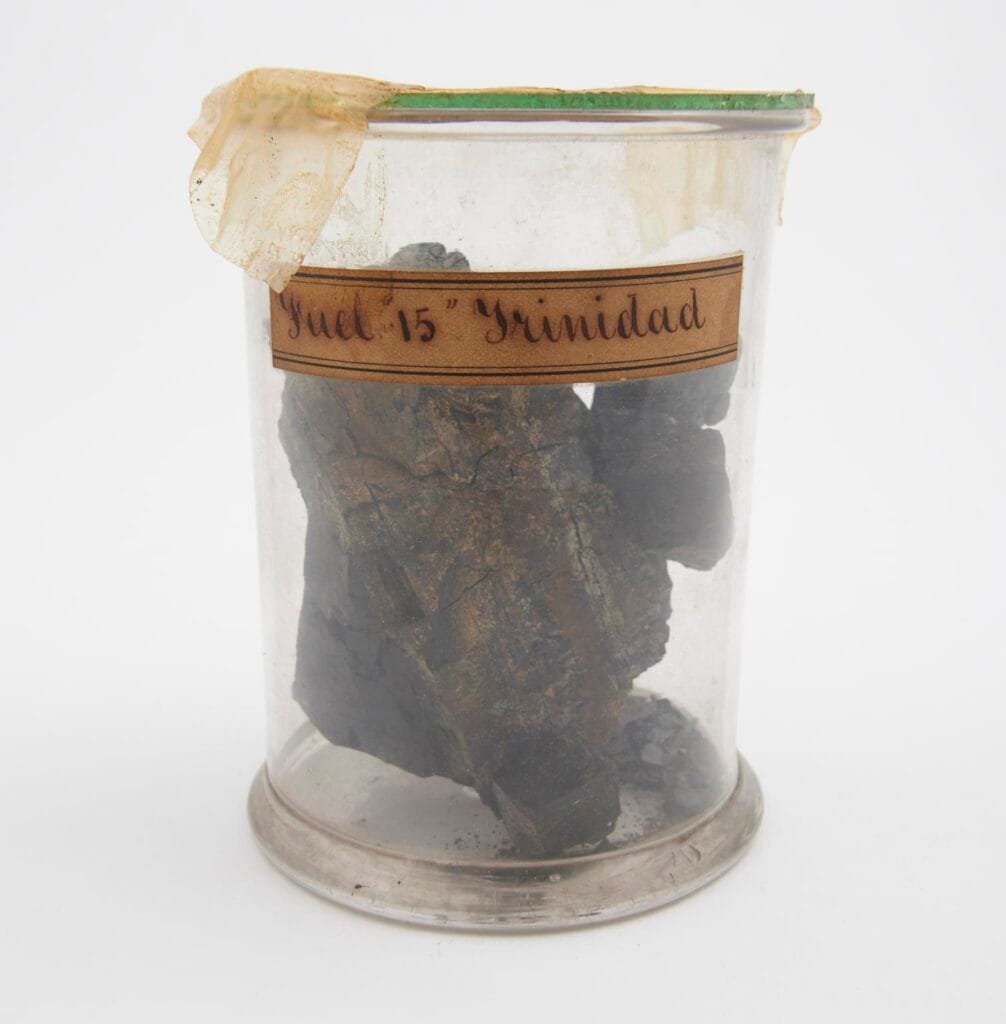
Anaïs: So many. There was a letter about someone called Mr. Bonnycastle who sent John Percy a piece of asphalt from Trinidad, from the pitch lake of Trinidad which is natural asphalt. He asks John Percy to analyse it and to let him know what he can do with it commercially. And it goes cold after that. I can’t find any mention of him anywhere else. I don’t think he actually put up a company. But a few decades later that specific lake was mined for asphalt which goes on to pave the streets of the biggest cities in the United States, including New York City. So, this letter shows that there was interest in trying to find commercial uses for asphalt from this area earlier than we might think.
Andrea: I’m interested in how you approach the language in these documents, and whether the scientific content requires a different approach to what I’m more familiar with, which is the context of anthropology collections.
Anaïs: That’s an interesting question, because I have no scientific background. Talking to geologists has helped and also literally going to mines. I had the opportunity to spend a few months in Australia last year, going to the old gold mines. So, that was helpful to understand what is actually going on here. But the actual scientific writing is probably the biggest challenge for me. What’s useful is that they are very explicit about what they want, so it’s not really a case of having to read it against the grain or anything.
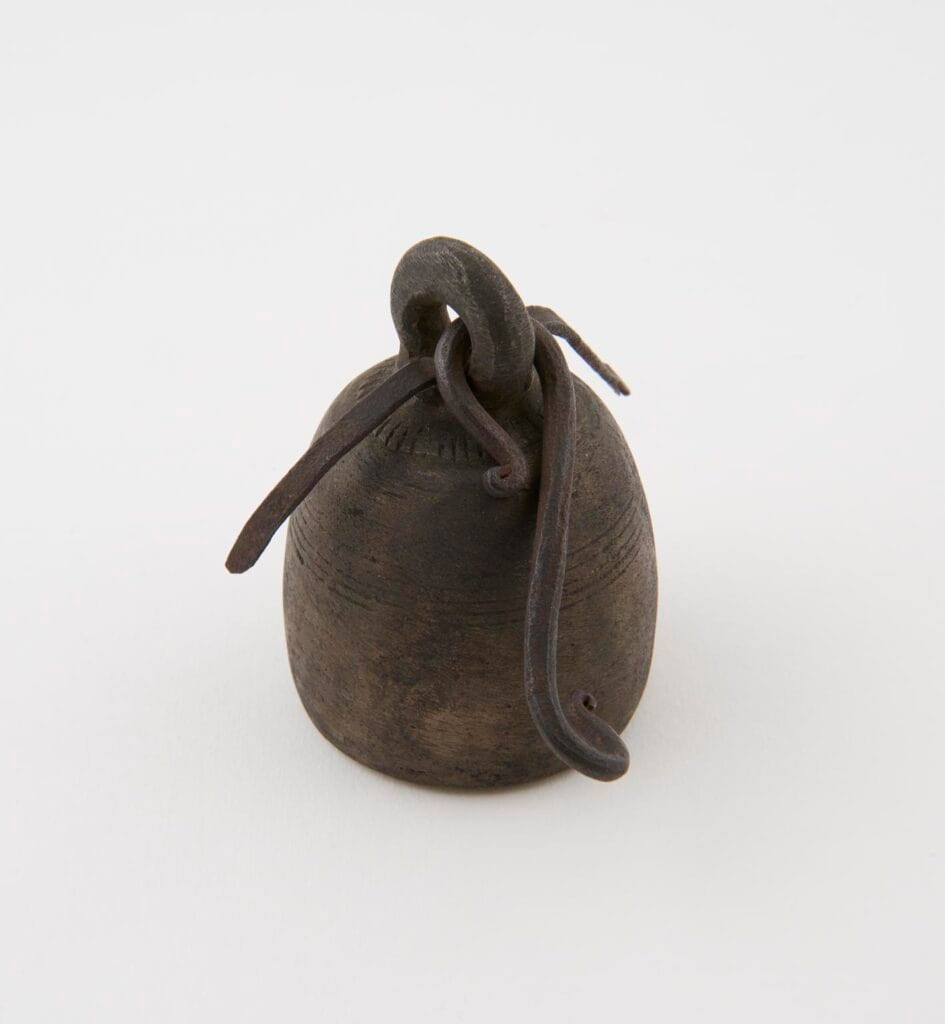
So, the chapter I’m currently writing is about iron working in India and how the British colonial government try to set up a local iron industry in India to produce iron for the railways. So, this specific chapter that I’m writing right now is about how metallurgy was tangled up with scientific racism. So, the scientific language is infused with these narratives about Britain is more civilised and advanced and needs to bring its superior iron working technologies to India to civilise the population through technology. So, they’re talk about how superior British blast furnaces are to traditional Indian iron working techniques. We’re using coal, they’re using charcoal. Things like that. And this ends up being part of a justification to mine in India. That technocratic language plays a really important role.
Andrea: Earlier, you mentioned that geology displays in museums are beautiful and the context of colonial extraction is missing. What would you like displays to look like?
Anaïs: I think it’s such a great opportunity to make visible the processes of production. Today, these processes are hidden from us and I think it would be interesting to show that even in the nineteenth century, people living in Britain didn’t necessarily know exactly what was going on. It would be interesting to show the process of extraction for a certain metal, following that journey from being a rock to being something that we use in our daily life. I mean, metal is literally in everything now. It’s interesting to think more about the materials around us and how they actually got here. What labour and energy went into getting them here? And there’s a connection between colonial extraction in the nineteenth century and today. A lot of mines that I studied are still open today. And the power dynamics have not actually changed that much since then. But I would add that one of the major issues in the museum sector today is the fact that so many museums are funded by fossil fuel companies and finance capital, who have no interest in making these processes visible.