A Personal History & Reflection
– Manika Arora
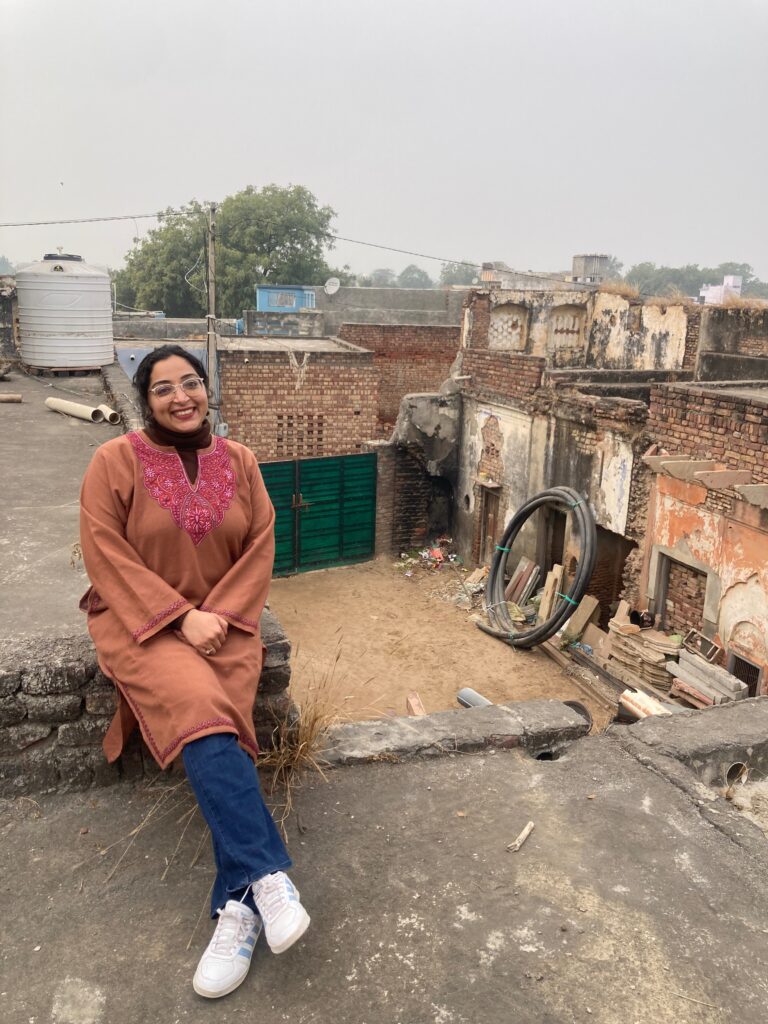
Arora in her paternal house in Village Baliyaali, Bhiwani District, Haryana, India
Whenever I write of home, it seeps quietly into my pages, sometimes, as a vivid memory, other times, as a half-forgotten dream, and occasionally, as an elusive self; and each time, it becomes something perpetually longed for. Lately, it occurred to me that perhaps, I have embodied a fragment of the displacement my grandparents actually went through. The homesickness I bear, though, is the lightest toll of that madness people experienced during the Partition of Punjab in 1947.
These are the ruins of my very first home, a magnificent haveli where my grandparents settled after they left their home behind in Multan. They made a home out of this abandoned house as they slowly rebuilt their lives here. My father was born, raised and married in its aangan (courtyard). For us, it was our grandparents’ house that we visited every Sunday. Last winter, I visited it after a decade and saw what was left of it. Trudging through the remains, I could almost see its carved wooden gates opening into a baithak where my uncle attended to his guests. The inner courtyard smelled of the aroma of food being cooked. The bedrooms were the innermost quarters of the house where my grandfather stocked up Parle-G biscuits for my brother and I. I also remembered him telling us the stories of Akbar and Birbal as we sat there munching. Much like my grandfather, the house, to me, has always been old. The terrace I am sitting on (in the photograph) used to be the heart of this house, a space vibrant with family gatherings and wedding ceremonies. I was always intrigued by its maze-like layout, to the extent, whenever I read novels as an adult, I instinctively mapped them onto this very landscape. Its architecture sparked a spirit of adventure in the child-me and also, became a haven for us during the floods in 1995. The house, though in its ruins today, carries the fragments of my childhood, echoing all the happy and sad stories it held us through.
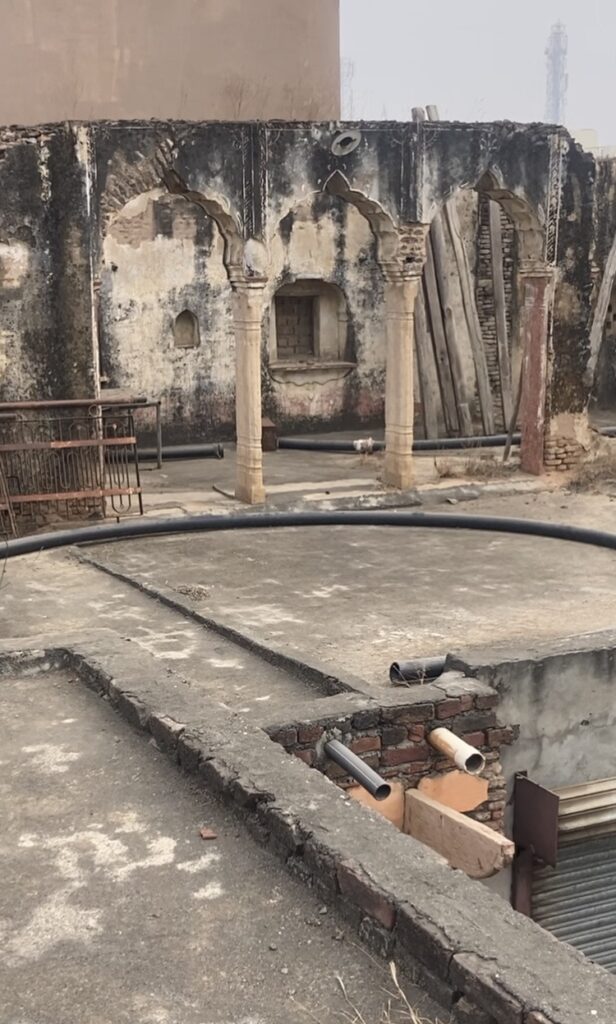
I walked across the house. To my surprise, it whispered another story to me. The story of the family it was built to inhabit. Growing up, I had heard an anecdote of a young man, apparently a lawyer in Pakistan, who visited this house several years after the Partition. The house, once, belonged to his family. He narrated its story, how it was designed for two brothers, evenly divided into two parts with a symmetrical layout throughout. I tried to enter into that unfathomable moment of history. The pain and the predicament families went through while leaving behind everything they built. Some random lines were drawn and the meaning of home changed overnight. I thought of that man and could almost sense the yearning that brought him here. What is it that we share? He and I. Is this home more his than mine? I say it is my first home, but does my story really begin here? Or did it begin at the home my grandparents had to leave behind, the one I can only dream of? I ask, but there are no answers. I looked at the crumbling walls around. They stand as a witness holding the stories of two families, of loss and longing; and of hope and resilience. The old house remains our only link to that fractured past and sharing its stories, perhaps, is the only way to impede that from fading into oblivion.
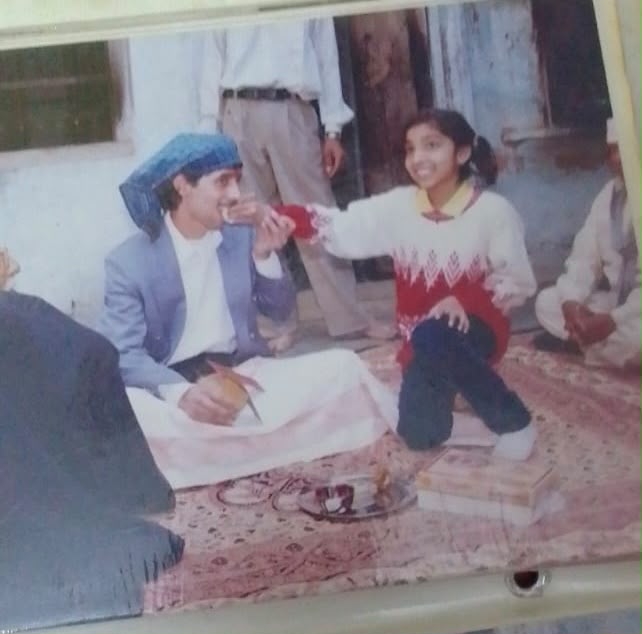
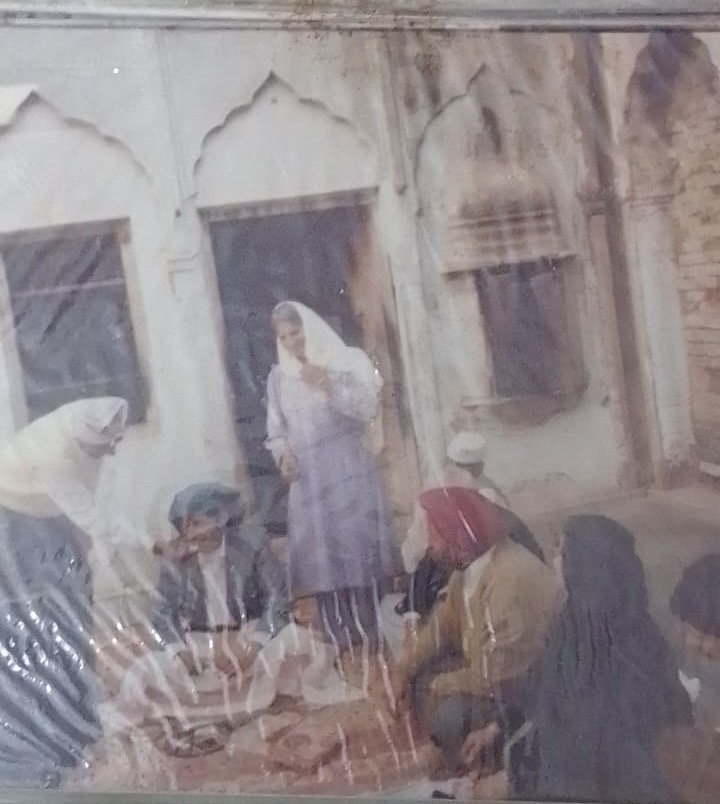
Weddings in courtyard of big, old house were very common in India. Author with her cousin in c.1996
Manika Arora is an Assistant Professor of English at NMIMS, Chandigarh, India. Her doctoral research examines the dynamics of the image in the poetry of Sujata Bhatt from a multicultural perspective and explores the interaction between the visual and verbal image. She has published in several reputed journals, and her research interests include poetry, visual studies, gender studies, and Indian aesthetics.